Service Area
Fence Permits in St. Petersburg: No Footer, No Permit
The city's own rule: a fence or hedge meeting zoning with no footer needs no permit, walls and columns do - plus the dated height table by yard, and the office to call.
By Ray Vasquez · Published July 28, 2026 · Last checked July 28, 2026
On this page
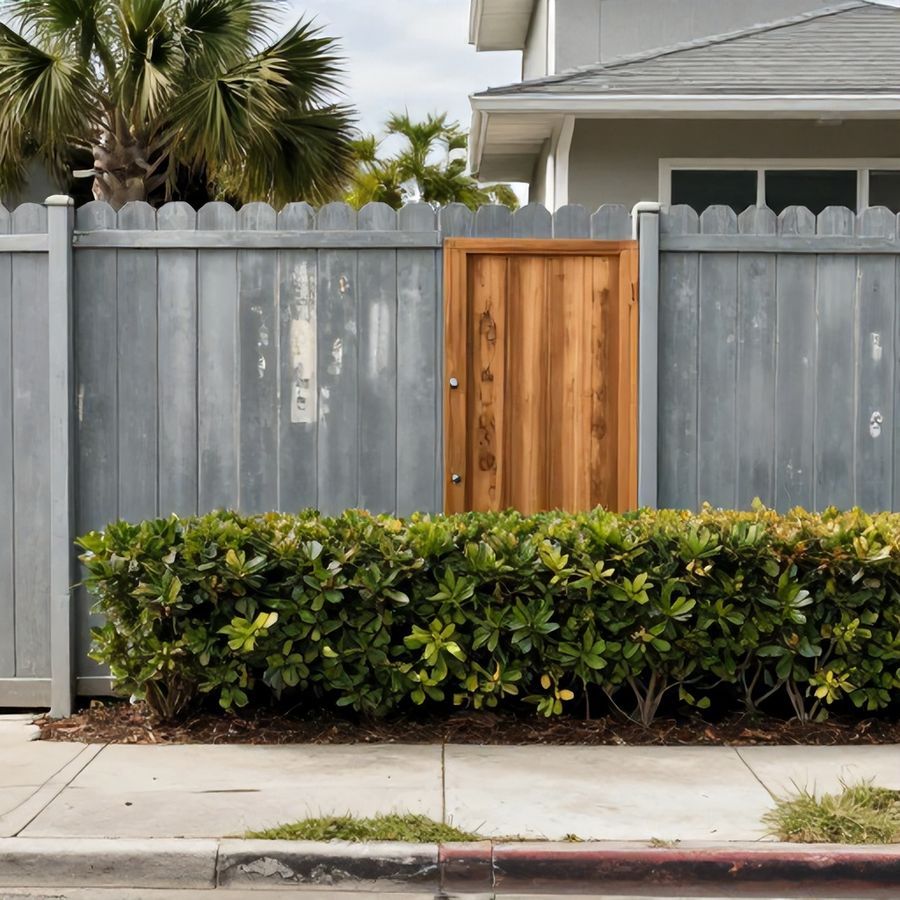
St. Petersburg’s own rule, printed on the city’s fence handout dated July 18, 2025: no permit is required for a fence or hedge that meets zoning and has no footer. Walls and columns are a different story - those need one. That single sentence flips the question most homeowners bring to this page. You’re not asking how tall first. You’re asking whether anything going into the ground is set in concrete as a footing, because that’s the line the city actually draws.
St. Petersburg sits inside Pinellas County, but it runs its own land development code, and that code - not the county’s, and not the county’s own internal contradictions - governs everything on this page. See the service area hub and the Tampa Bay jurisdiction table for how the rest of the region compares.
Two offices, two questions
Planning & Development Services handles zoning and dimensional questions - what height, what setback - at (727) 893-7471. Construction Services and Permitting handles the actual permit, the footer question above, at (727) 893-7231. Call the wrong one and you’ll get bounced, so know which question you’re asking before you dial.
What the code says, yard by yard
The table below comes straight from the city’s handout, dated July 18, 2025. Print that date next to it - a table without a date is worth nothing a year from now.
Height by yard position (City of St. Petersburg fence handout, updated 07-18-2025)
| Yard position | Any style | Hedge | Decorative | Conditions |
|---|---|---|---|---|
| Front, non-major street | 4 ft | 5 ft | 6 ft | With conditions |
| Front, major street | 4 ft | 6 ft | 6 ft | - |
| Interior side, street side, rear | 6 ft | 10 ft | - | - |
Height is measured from existing natural grade in every row - our setback guide covers how that plays out on a sloped lot. “Open fence” means 25% opacity or less, not counting support posts up to 4 inches wide, which is what makes the decorative rows usable at all. The finished side also has to face the street or the neighboring property - confirmed present in St. Petersburg’s code, worth a beat of attention because unincorporated Pinellas has no such rule at all. Same county, different obligation, depending on which side of the city line your lot sits on.
Two carve-outs matter beyond the table. Historic-district properties need a Certificate of Appropriateness before putting up a fence in front of, or in line with, the front façade. Waterfront yards carry their own separate height, location and design rules, plus a minimum 2-foot sidewalk setback for a 6-foot fence or wall - the handout doesn’t itemize the rest, and I’m not going to guess at what it left out.
The state exemption, and where it stops
Florida’s HB 803 gives homeowners a state-level permit exemption for lower-cost work, and St. Petersburg publishes its own exemption form for it - work under $7,500, effective July 1, 2026, confirmed on the city’s own exemption-form page. Here’s where I stop, on purpose: the act never defines “structural,” flood-hazard parcels are carved out entirely, and none of it is self-executing. Whether your fence qualifies isn’t something I’ll tell you from here - that’s a conversation with Construction Services and Permitting. Largo, the other Pinellas city in this series, implements the same exemption differently; see Largo’s fence rules for the contrast.
No county-level fence price differential is established anywhere in our research across the three counties. St. Petersburg’s own fact is narrower: no fee applies in the no-footer base case, because no permit is required there, and no fee figure was retrieved for the footer or wall case. No per-linear-foot band on this page.
Licensing: something real to check
Here’s something a St. Petersburg reader gets to verify that a Hillsborough or Pasco reader doesn’t. Pinellas County has a real “Fence Erection Specialty Contractor” license category, on the books since March 21, 1995 and still listed by the board - call the Pinellas County Construction Licensing Board at 727-582-3100 to check someone’s status. Whether the board still issues new fence licenses since House Bill 735 passed isn’t settled by any document I’ve found, so I’ll say that plainly rather than guess.
Before you dig
Confirm your specific case with one of the two offices above. This page reports what the city’s handout says, not a ruling on your yard. (I set a vinyl fence run too shallow once in sugar sand, on a job that didn’t even need a footer by this rule - depth is a different problem than the code addresses, and sugar sand punishes shortcuts either way.)
The footer test
Work through these in order, and call the matching office:
- Anything going into the ground set in concrete as a footing? That’s a permit, every time - Construction Services and Permitting, (727) 893-7231.
- Columns as part of the design? Same rule, same office, same number.
- Building a wall rather than a fence? Walls require a permit regardless of the footer question.
Clear on all three - no footer, no columns, and it’s a fence or hedge meeting zoning - and the handout says you don’t need a permit. Call Planning & Development Services, (727) 893-7471, if the zoning half is what’s unclear.
FAQ
Does St. Petersburg require a fence permit? Not for a fence or hedge that meets zoning and has no footer - the city’s handout, dated July 18, 2025, says so directly. Walls, columns and historic-district properties are the exceptions, and a fence doubling as a pool barrier has its own rules on our pool-safety page.
How tall can my fence be here? Front yard on a non-major street tops out at 4 feet for any style, 5 feet for a hedge, 6 feet decorative with conditions; interior side, street side and rear go to 6 feet, 10 feet for a hedge. All of it is measured from existing natural grade, which is what decides a sloped lot.
What counts as a footer? The handout draws the line at anything set in concrete as a footing, and Construction Services and Permitting confirms the call for your project. I’m not inventing a construction test the city hasn’t published - if you’re unsure, that’s the call to make before you dig.
Call Planning & Development Services for zoning, Construction Services and Permitting for the permit, before an installer breaks ground. For submittal steps once you’ve confirmed the basics, see how a Tampa Bay fence permit application works.
Sources
- Permit test, height table, opacity, finished side, historic and waterfront notes: City of St. Petersburg fence handout, updated 18 Jul 2025; LDR §16.40.040
- HB 803 exemption form: City exemption-form page; ch. 2026-63, Laws of Florida, effective 1 Jul 2026
- Fence license category: PCCLB license-type list, retrieved 2026-07-28
- County fee non-publication: Pinellas County fee page instruction, FY25 from 1 Oct 2024
Legal and permit information last reviewed July 28, 2026.
This site is an independent research resource - it does not install fences, employ crews, hold a contractor license or publish customer reviews, and nothing here replaces confirmation from the city’s own offices for your address and project.
Code and permit claims reviewed by Dana Whitfield, CGC.
Code and permit claims reviewed by Dana Whitfield, CGC, certified building code inspector.
Florida-licensed general contractor, certified building code inspector. How we check facts: our sources and limits.
Read next
- Tampa Bay Fence Permit Rules by City and County, 2026Whether a fence permit is required in each Tampa Bay jurisdiction, which office issues it, the fee and its basis, and the code section behind each figure - with dates.
- Fence Permits in Clearwater: Chain Link Is Its Own RuleClearwater regulates chain link separately - banned downtown and in front, clad or capped, and landscaped - with the dimensional code dated. The permit position is still open.
- Fence Permits in Land O' Lakes: Walk In, Don't DriveLand O' Lakes follows Pasco's fence rule like its neighbors - but one of the county's three walk-in permit offices sits here, plus two named CDDs to check.
Want a quote read by someone who has no stake in it?
We do not install fences. Tell us what you are planning and we pass the request to a licensed contractor who works your area.
Request a callback
Enter your number and we will call you back. Nothing else is required.
We do not install fences. Your request goes to a licensed contractor who works your area, and we may be compensated for the introduction.
Advertiser disclosure. This page can earn us money. If your request reaches a contractor through the form or the phone number above, we may be compensated for that introduction. It has never determined what any page on this site says, and no contractor has editorial input. We hold no contractor licence of our own and perform no work.