Tampa Bay Fence Co.An independent fence guide for the bay - we don't install, we explain.
Request a callback

Enter your number and we will call you back. Nothing else is required.

We do not install fences. Your request goes to a licensed contractor who works your area, and we may be compensated for the introduction.

Hillsborough · Pinellas · Pasco

Fence Installation in Tampa Bay: What It Costs, What the Rules Are, and How to Judge a Fence Company

An independent guide to fencing across Hillsborough, Pinellas and Pasco, written by someone who spent twenty-two years setting posts here. We do not install fences and we do not sell them.

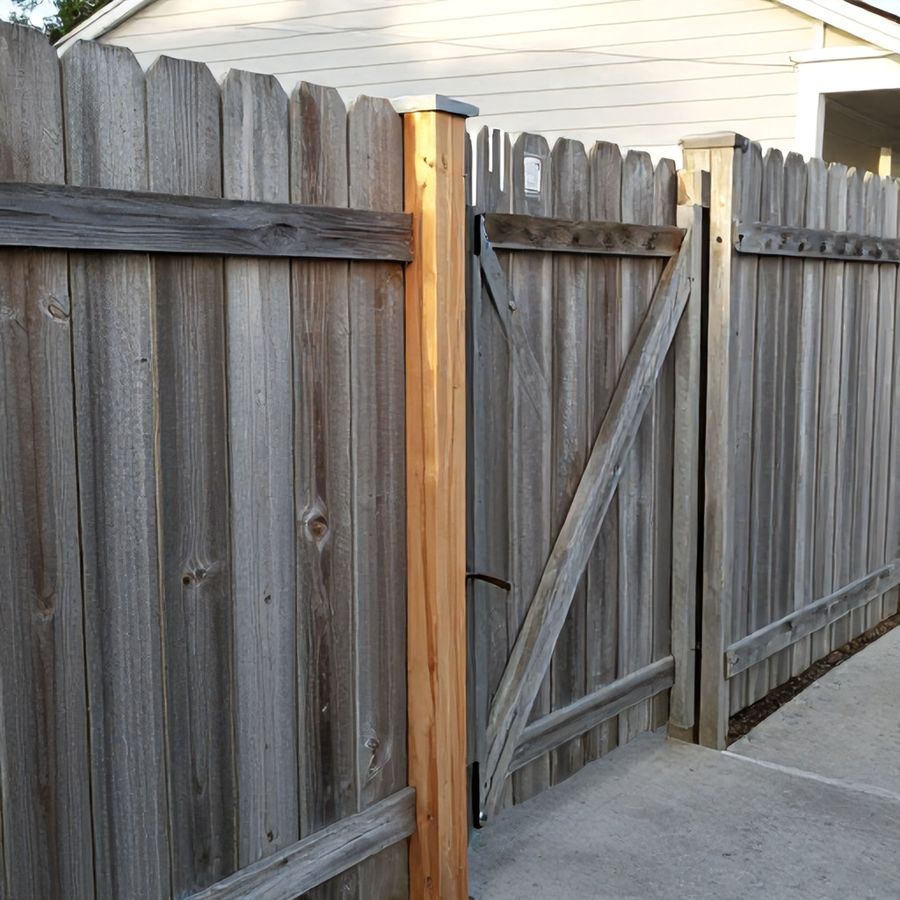
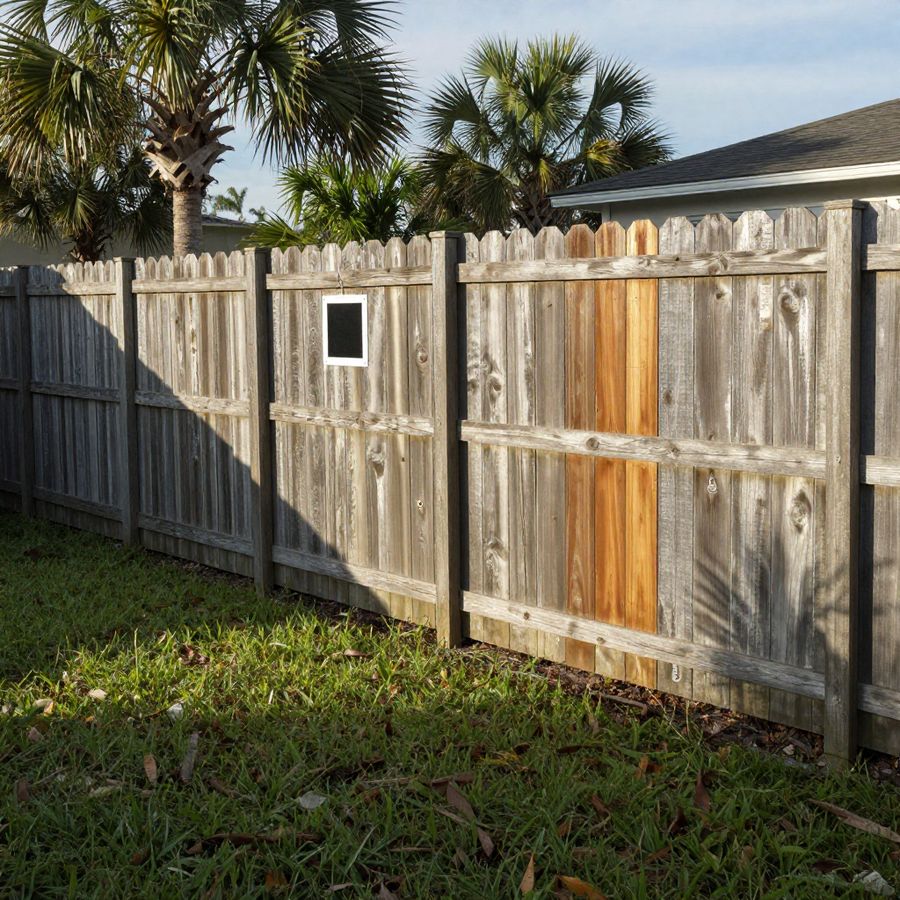
A weathered six-foot wood privacy fence along a Tampa Bay back yard in late afternoon light.

$12-45

installed per linear foot across the four materials this metro actually quotes, gathered July 2026

18

authorities in the permit table, each row carrying its own document, section and date

3 ft

Tampa's codified front-yard limit for an opaque fence, where five aggregators all said four

What a fence actually costs around Tampa Bay

Most people arrive at this question wanting one number per foot, and one number per foot is the least useful thing anyone can hand them. Here are the current installed bands for this metro, gathered in July 2026: chain link $12 to $20 per linear foot, wood privacy $18 to $32, vinyl privacy $25 to $40, aluminum ornamental $28 to $45.

Composite has no measured Tampa Bay price at all, and the closest honest stand-in is a Florida statewide figure around $70. Wrought iron has five published Tampa-adjacent figures spanning $20 to $500 per foot, which is not a range so much as an admission that nobody has measured it.

The bands are the easy part. What they hide is where quotes actually diverge.

A gate is a fixed cost that ignores your fence length entirely: a walk gate runs $300 to $550 and a driveway gate $600 to $1,000 before any automation, so a short run with two gates carries a per-foot average that looks absurd next to a long plain run.

Height does not scale in a straight line either, because a taller solid panel needs bigger footings and tighter post spacing rather than just more boards. Sloped ground adds roughly 20 to 33 percent to the base.

Removing an old fence runs $1 to $8 per foot depending on whether it happens on the same visit as the install or as a separate trip, and we publish the whole spread instead of the tidiest number in it.

Then there is the number that nobody prices, because it cannot be priced from a distance: the permit fee, which in this metro depends on which side of a line your address sits.

Work your own yard through the fence cost estimator, which uses these same bands with every rate constant printed on the page and dated, or read the full argument in what a fence really costs per linear foot here.

A homeowner comparing two written fence quotes on a kitchen table in daylight.

Whether you need a permit depends on your parcel, not your city

We expected counties to set a floor and cities to add to it. The documents say otherwise, and the inversion is the most useful thing this site found.

In unincorporated Hillsborough, the county's own codified Land Development Code states at section 6.07.01.C that fences require neither a zoning permit nor a building permit, while walls do. In unincorporated Pasco, standard residential fences sit on the county exemption list, though a fence supported by brick, block or concrete columns falls back into the requirement.

And then New Port Richey, a city of roughly seventeen thousand people, requires a fence permit for every fence with no exception for material or height. A mile of road can flip the answer completely.

Unincorporated Pinellas manages something stranger: four of the county's own web pages contradict each other on whether a fence needs a permit. We publish the contradiction rather than choosing the friendliest page, and the resolution is a phone call to 727-464-3888.

Since 1 July 2026 a state law adds another layer.

House Bill 803 requires local governments to exempt single-family work valued under $7,500 from the local building permit requirement, but it excludes property in a flood hazard area, it reaches building permits rather than zoning approvals, it has to be claimed in writing with contract documents, and it contains no pre-emption language at all.

Whether it touches a city fence permit that operates as a zoning requirement is unresolved in the statute itself.

The jurisdiction table carries eighteen authorities with the document, the date and the section behind every cell, including the rows where the answer is genuinely not established.

The permit article walks the procedure once you know which office is yours.

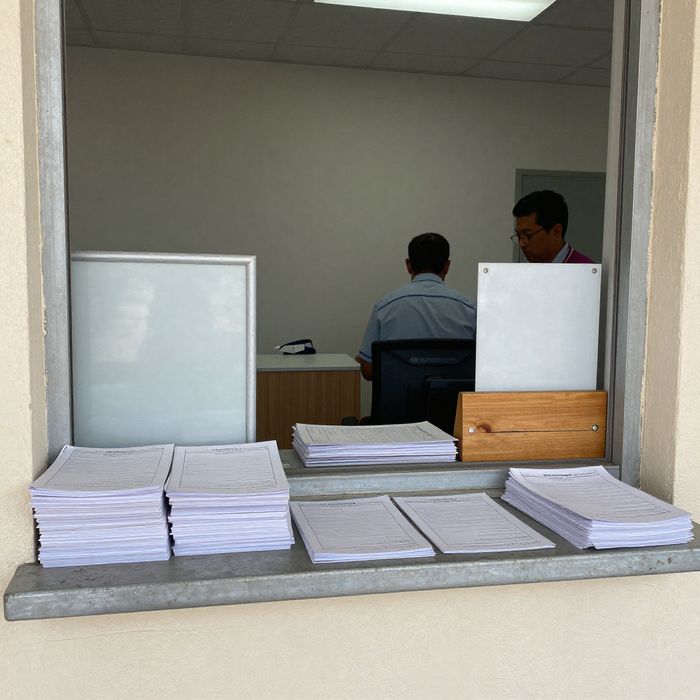
A county permit counter window with printed forms on the ledge.

Which material survives here, and which one just looks like it will

Every material in this category fails eventually, and each fails in its own way. Knowing the mechanism outlasts memorizing anyone's warranty.

Vinyl chalks and embrittles under ultraviolet light rather than heat, and formulations without a proper stabilizer package go first, with darker colors ahead of lighter ones.

Galvanized steel survives by letting its zinc coating corrode in place of the steel beneath, and salt-laden air consumes that zinc faster than inland air does, which is why a chain link fence three blocks from the water behaves differently from the same fence in Wesley Chapel.

Aluminum does not rust, but it corrodes galvanically wherever a dissimilar-metal fastener touches the frame in humid salt air. Wood fails at the bottom of the post, from fungi that need only sustained moisture and warmth, and termites follow the same moisture.

UF/IFAS lists attached fences among the wood-to-ground-contact pathways that bring termites toward a house, and states plainly that treatment offers no guarantee of permanent protection.

One local wrinkle catches people who chose on price alone. In Pasco County, chain link and welded wire fences visible from a collector or arterial roadway are prohibited outside industrial zoning.

In Clearwater, chain link is regulated as its own class: banned downtown, banned in front of the principal structure, capped at 48 inches unless clad in green or black vinyl, and required to be landscaped.

The cheapest material in the metro is not available everywhere, and in one city it arrives with a landscaping bill attached.

The side-by-side service-life and price table for every material sits on the materials hub, with the individual comparisons underneath it.

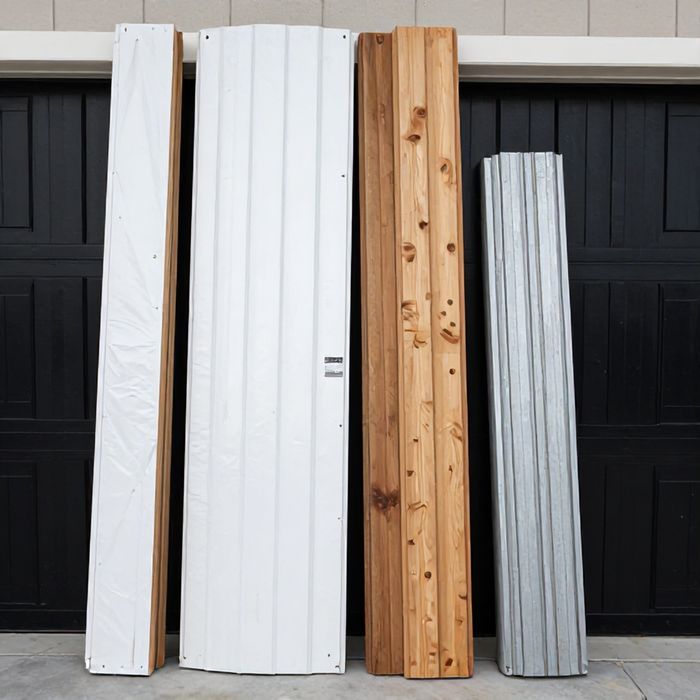
Wood, vinyl and aluminum fence samples leaning against a garage wall.

Pool barriers are the one part of this that is law

Everything above is a spending decision. This is not.

Florida's Residential Swimming Pool Safety Act and the Florida Building Code between them set what a barrier around a pool has to be, and the gap between what people think it says and what it says is wide enough to fail an inspection.

The barrier, including an above-ground pool's own wall where that wall serves as the barrier, must stand at least 48 inches above grade measured on the side facing away from the pool. That figure is verbatim code, at R4501.17.1.1 of the Florida Building Code, Residential, eighth edition, and the statute writes the same height as four feet.

Where a barrier is mounted on top of an above-ground pool structure, no more than four inches of vertical clearance may sit between the two. A ladder or steps must be securable, lockable or removable, and any opening created by removing them must not pass a four-inch sphere.

There is also a genuine tension between two documents that no consumer page seems to mention: the statute reads as a menu of five options, while the implementing code requires a barrier for every outdoor pool with one narrow exception.

We publish both with their clauses rather than smoothing them into one confident sentence.

The clause-by-clause requirements article is written so you can walk your own barrier with a tape measure and produce a written list of suspected failures with a clause beside each.

It will not tell you your barrier is compliant, because no page can do that. The remediation guide orders the fixes by disruption and warns about the two or three repairs that create a new failure somewhere else.

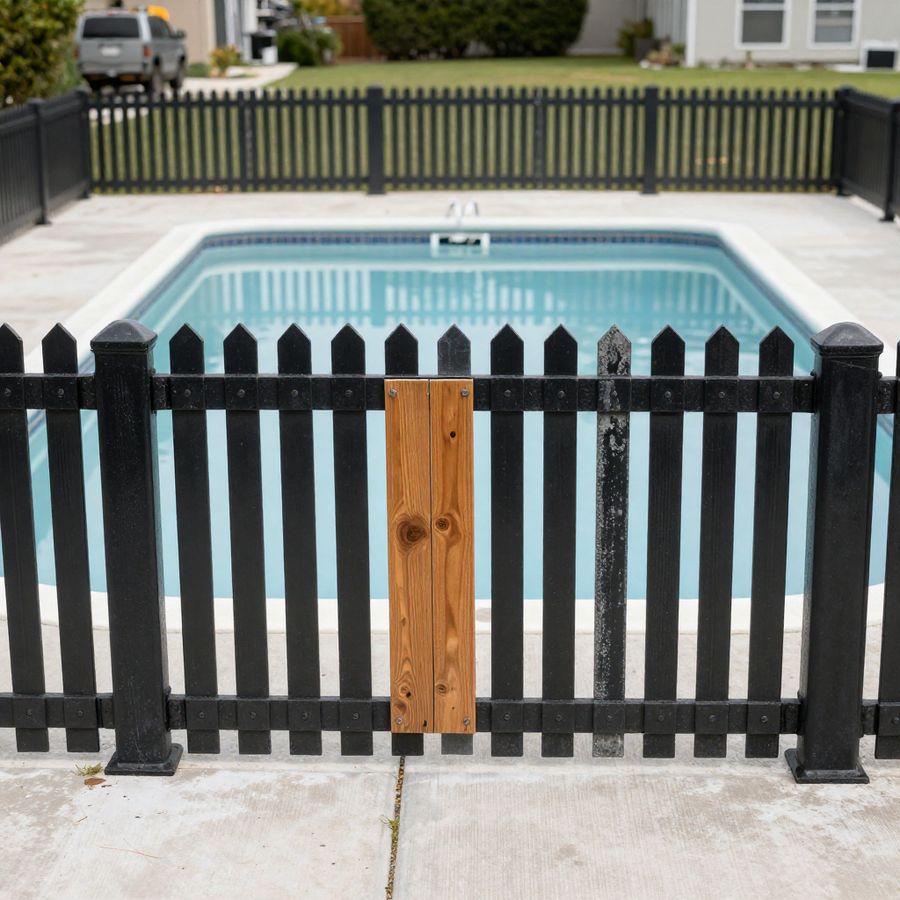
A self-closing gate in a pool barrier fence beside a screened Florida pool.

How to judge a fence company when the trade is barely licensed

Florida does not license fence contractors at state level.

The Department of Business and Professional Regulation's own list of construction categories runs from air conditioning through underground utility and excavation without naming fence anywhere, and House Bill 735 pre-empted local occupational licensing in 2021 with a carve-out for local licenses predating that year.

That carve-out turns out to matter, and the answer differs by county. Pinellas County has a Fence Erection Specialty Contractor category, defined by its construction licensing board since March 1995 and still on the board's live list. Pasco does not: a closed list of 32 competency categories in which the word fence never appears.

Hillsborough does not either. So a St. Petersburg reader can ask an installer a licensing question and verify the answer with a board on 727-582-3100, and a Riverview reader cannot, because there is nothing to be licensed as.

Where there is no licensing board, you are the vetting authority, and the substitutes are unglamorous: proof of insurance, a written scope before any deposit, clarity on who pulls a permit and in whose name, payment tied to milestones rather than to a calendar.

One question sorts crews faster than any of them.

Florida law requires notification before excavation, names fence installation explicitly, gives at least two full business days, costs nothing, and sets a 24-inch tolerance zone around each marked utility.

Ask who is calling 811 and when. An installer who treats it as optional has told you how the rest of the job will go.

Three quotes, three different numbers is the page that turns this into a worksheet, written from the estimator's side of the table.

A pickup truck and post-hole auger parked at the edge of a suburban yard.

What this site is, and what it is not

Tampa Bay Fence Co. does not install fences. We employ no crews, hold no contractor license, publish no customer reviews of our own, and have no commercial interest in which material you pick. The name carries "Co." because the domain was bought before the editorial position was fully settled, and rather than quietly hoping nobody notices, we say it in the header, in the footer and here.

What we do is read the primary documents. Municipal codes with their supplement dates, statutes with their section numbers, county fee schedules, manufacturer specifications. Five independent commercial sources agreed that Tampa allows a four-foot opaque fence in a front yard; the codified section says three feet.

Agreement between secondary sources is worth nothing, because they copy each other. Where we have no local figure, the page says so rather than borrowing a national average and calling it Tampa Bay. There are several such gaps on this site, and each of them is labeled.

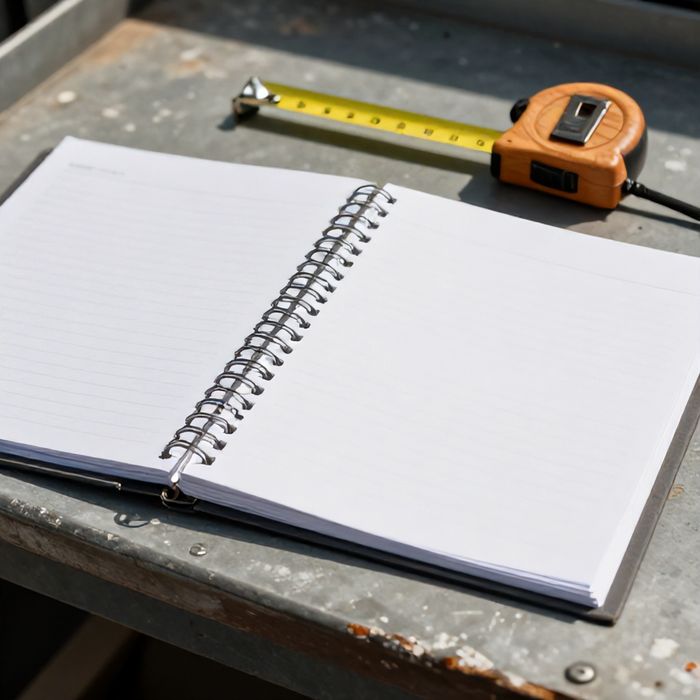
An open municipal code binder and a tape measure on a workbench.

What is on this site

Three guide clusters and three catalog hubs. The guide clusters ship as articles rather than as landing pages, so their entries are listed here in full.

A tape measure stretched along a finished fence line.

Guide cluster

Fence Costs

What a fence costs in this metro, what a per-foot number leaves out, and how to normalize three quotes that arrive with three different totals. Written for the homeowner who is two to six weeks from hiring someone and wants to spot padding before they sign. Every figure carries the month it was gathered.

A permit application form on a clipboard in front of a fence.

Guide cluster

Permits & Property Lines

Whether your address needs a permit, how tall you may build, where your yard actually ends and who owns the fence on the boundary. This is the cluster where the metro contradicts itself most, and where we cite the code section and its date beside every figure.

A pool safety barrier with a self-latching gate.

Guide cluster

Pool Barriers

Florida's Residential Swimming Pool Safety Act and the building code behind it, clause by clause, with the measuring surface stated beside every dimension. This is child-safety law rather than a design preference, so nothing here is inferred and every claim carries its citation and its code edition.

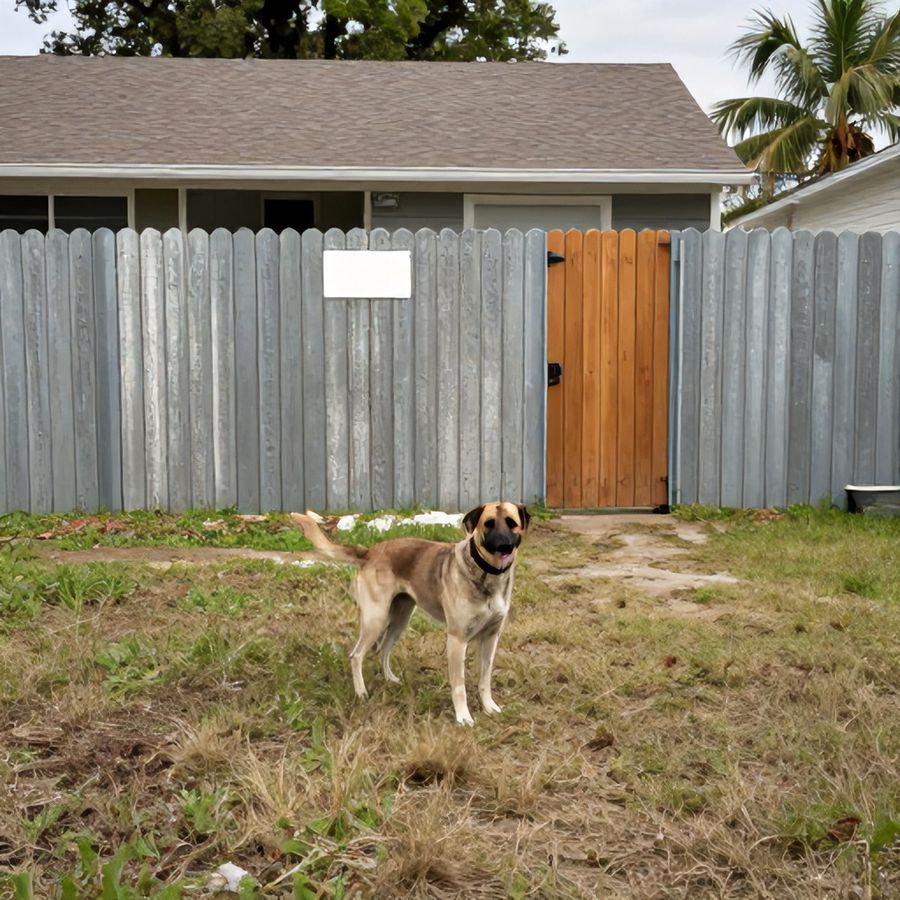
A dog standing at a back-yard fence line.

Hub

Fence Projects

Fifteen jobs written one situation at a time rather than one product at a time: containing a dog, powering a driveway gate, fencing a slope, screening a pool pump, replacing a rotted run, getting past architectural review. Each page owns the mechanics of its own job and links out rather than repeating the shared parts.

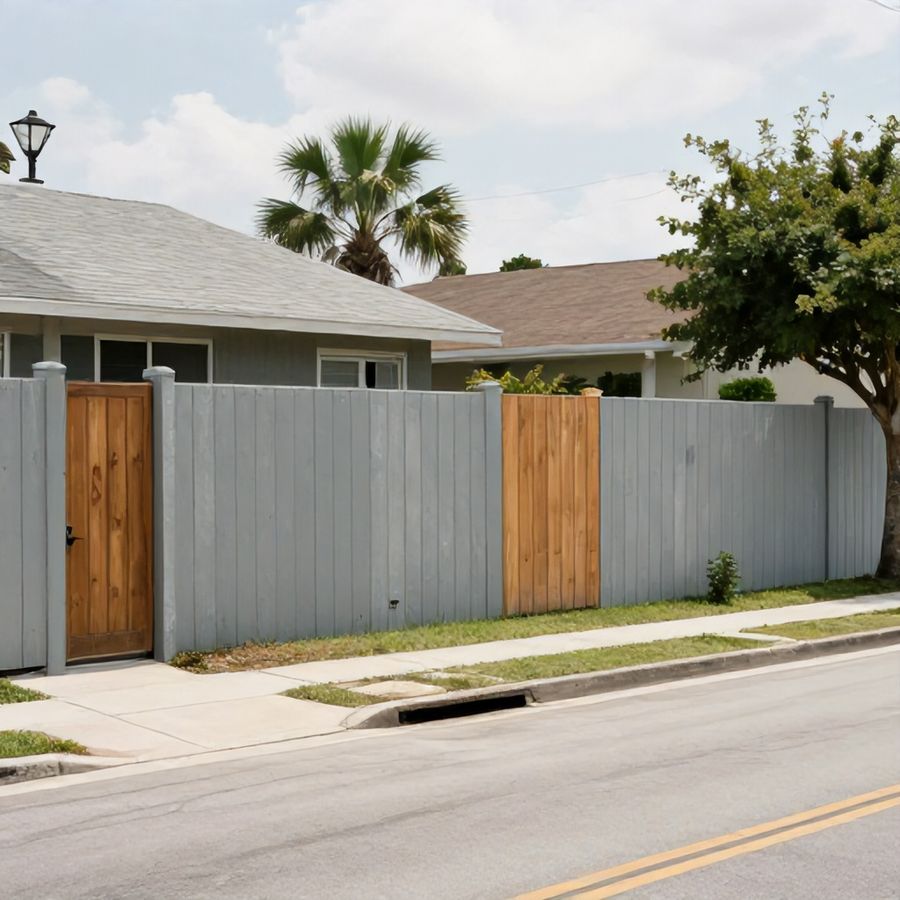
A suburban Tampa Bay street with varied fence styles.

Hub

Service Area

Eight places across three counties where research found genuine local substance: a named office, its own ordinance, a fee, a dimensional rule, a confirmed institution. Two candidate cities did not make it, and the hub says which and why. Your mailing city is not your jurisdiction.

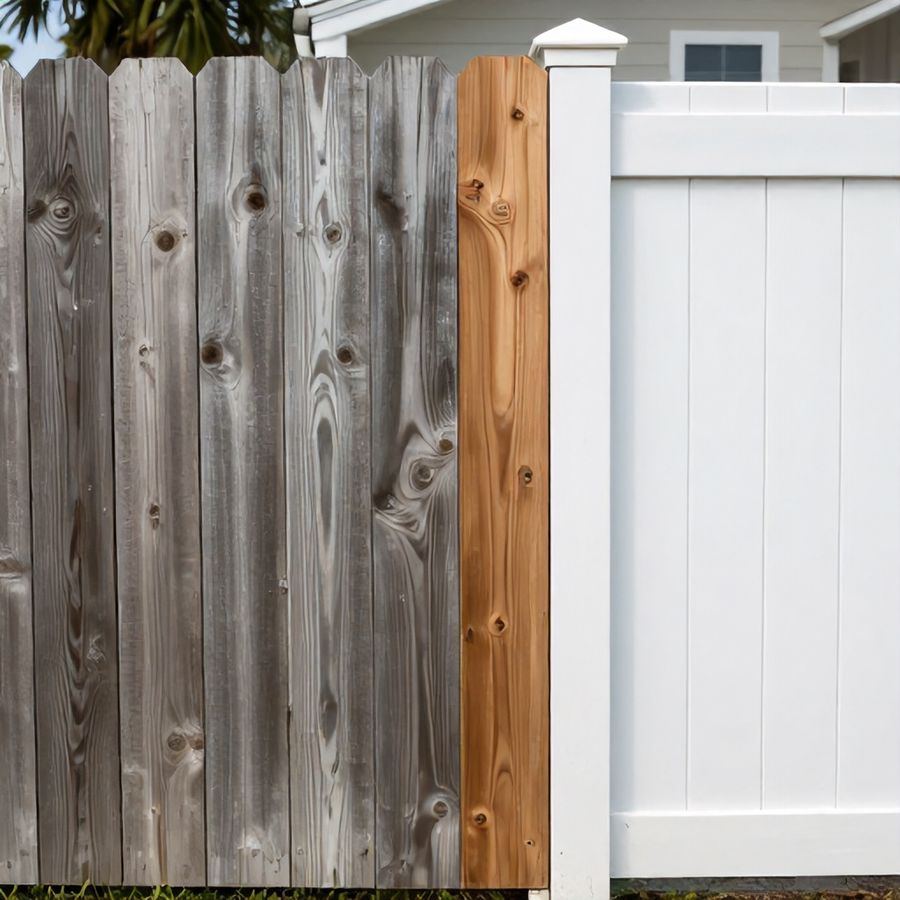
A wood fence panel beside a vinyl fence panel.

Hub

Materials

Wood, vinyl, aluminum, chain link and composite compared on price, published service life and what salt air and ultraviolet light do to each. Almost no figure in this category comes from an independent body, and the hub says so instead of implying an authority the numbers do not have. The site's two calculators live here.

How this site is put together

Ray Vasquez, author and editor

Ray Vasquez spent twenty-two years installing fence in Hillsborough and Pinellas before a shoulder injury moved him off the crew in 2023. He started on chain link for a commercial outfit in Brandon, ran his own three-man residential crew for eleven years, and then spent four years as an estimator, which is where he learned how quotes are really built and where the padding hides. The runs that went wrong get written up here as readily as the ones that went right: the vinyl set too shallow in sugar sand, the permit assumed unnecessary in Temple Terrace. He has no stake in what you buy.

Primary documents firstEvery figure datedCode claims reviewed by Dana Whitfield, CGC

Every page on this site starts with primary documents.

For a legal or permit claim that means the codified municipal text with its supplement number and date, the Florida Statutes section, the Florida Building Code clause, or the issuing authority's own fee schedule.

For a material claim it means the manufacturer's or the trade association's own specification. Prices are gathered from named Tampa Bay sources, with the month recorded beside them.

Aggregators and contractor blogs appear here only as leads, never as the sole citation for a dimension or a fee. The reason is not snobbery. Five independent commercial sources agreed that Tampa's front-yard fence limit is four feet; the codified section gives three feet for an opaque fence.

Secondary sources converge because they copy each other, and convergence is not confirmation. Where a source cluster looked like a content farm reusing boilerplate across unrelated articles while citing specific-sounding code numbers, we excluded it outright rather than quoting it carefully.

Some questions have no answer, and this site publishes those as results rather than hiding them. Pinellas County does not publish its fee schedule as a document at all. Clearwater's permit position survived six retrieval attempts unanswered.

No non-vendor service-life figure for removable mesh pool fencing exists anywhere, in any source class we could find. Composite has no measured Tampa Bay price. Each of those is stated on the page where a reader would look for it, with the office or document that would close it.

Every figure carries a date because permit positions, fee schedules and material prices all move, and a stale number presented confidently is worse than an honest gap.

Pages that state a code requirement, a dimension or a permit position are reviewed before publication by Dana Whitfield, CGC, a Florida-licensed general contractor and certified building code inspector, whose review line appears on those pages.

We do not install fences, employ crews, hold a contractor license, or publish first-party reviews of local companies. Where a page connects you with a contractor, that arrangement is disclosed on the page, and it has never determined what any page says. That independence is the only asset this site has, and it is worth more to us than any single referral.

Quick answers

Does Tampa Bay Fence Co. install fences?

No. We do not install, subcontract or broker fence work, we employ no crews, and we hold no contractor license. This is an editorial site that explains the job so you can judge the quotes you get. Where a page connects you with a contractor, that is disclosed on the page.

How much does a fence cost in Tampa Bay?

Between $12 and $45 per linear foot installed depending on material, as gathered in July 2026, before gates, height, terrain and removal. Those four adders are why two quotes for the same length of fence can differ by thousands, and the estimator handles them one at a time.

Do I need a permit for a fence here?

It depends on which authority governs your parcel, and the answer is not predictable from city size. Unincorporated Hillsborough and Pasco exempt most standard residential fences; New Port Richey requires a permit for every fence. Find your row in the jurisdiction table, then call the office named there.

Which fence material lasts longest in this climate?

Aluminum ornamental sits highest on published figures, then vinyl, then wood. Every one of those numbers comes from a manufacturer or an installer rather than an independent test, so treat the ranking as directional and pay attention to the failure mechanism instead.

Why does this site sometimes say it does not know?

Because the alternative is guessing, and on a permit position or a code dimension a confident guess is what gets a fence torn out. Where a figure is missing, we name the office or document that would settle it.

Want a quote read by someone who has no stake in it?

We do not install fences. Tell us what you are planning and we pass the request to a licensed contractor who works your area.

Request a callback

Enter your number and we will call you back. Nothing else is required.

We do not install fences. Your request goes to a licensed contractor who works your area, and we may be compensated for the introduction.

Advertiser disclosure. This page can earn us money. If your request reaches a contractor through the form or the phone number above, we may be compensated for that introduction. It has never determined what any page on this site says, and no contractor has editorial input. We hold no contractor licence of our own and perform no work.