Fence Projects
Above-Ground Pool Fence: The Installation Decision
Whether your above-ground pool's own wall counts as the barrier, when a separate fence is required, and what the ladder question really means.
By Ray Vasquez · Published July 28, 2026 · Last checked July 28, 2026
On this page
An above-ground pool raises one question before anybody buys a foot of fencing: does the pool’s own wall already do the barrier’s job, or do you need a separate one? I won’t answer that with numbers here - the exact height, clearance and opening-size figures this page doesn’t restate live on their own page, not this one.
This page sits inside the rest of the fence projects we cover. What’s covered here is narrower: the decision itself, not the code behind it.
The mechanics: when the wall counts, and when it doesn’t
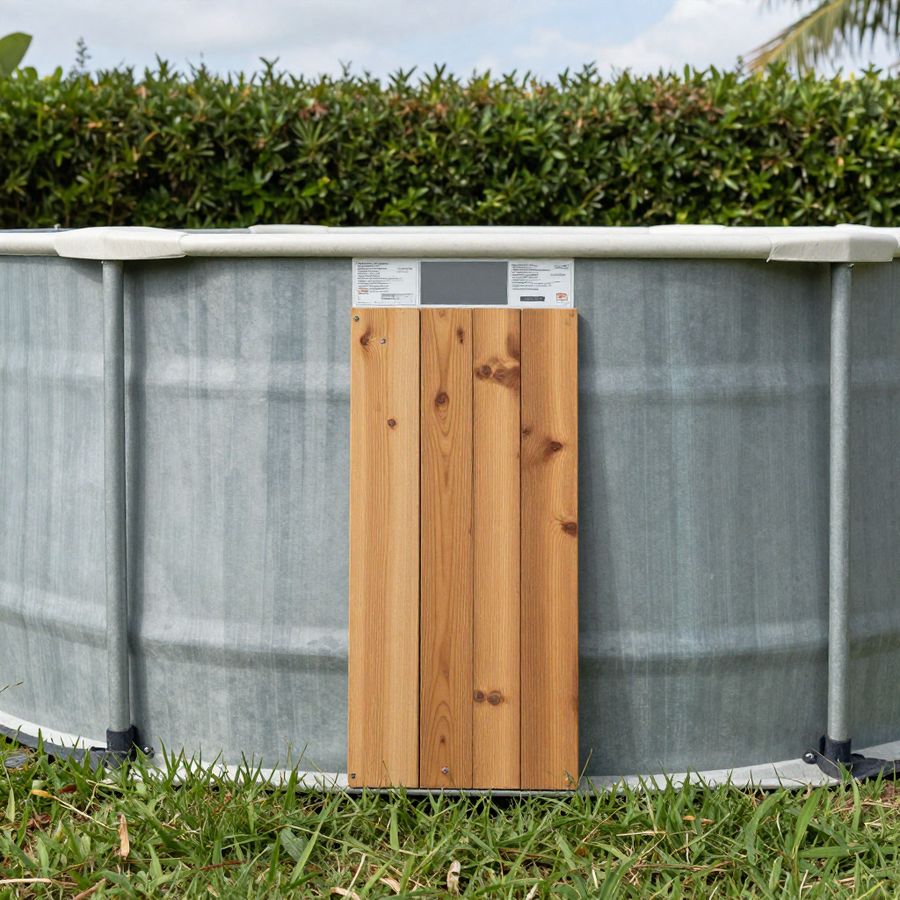
Here’s what surprises most homeowners: an above-ground pool’s own wall can serve as the required barrier on its own, no separate fence needed, provided it meets the same barrier requirements as any barrier - and the ladder or steps are secured, locked, or removed.
Remove the ladder instead of locking it, and the job isn’t done. The opening that removal leaves has to pass the code’s own physical test for how small it must be. I’m telling you a test exists, not what it measures - that number lives on the safety-act page.
A commonly quoted headline figure for this rule circulates on contractor blogs and neighborhood Facebook groups like settled fact. Researching this page, that number turned out to be a derived convention, not a direct quote of the rule itself - verify the real figure before leaning on it for a permit or a closing.
One hard fact, no clause number attached: mesh may not be installed on top of an above-ground or on-ground pool, which rules out one of the cheapest options people ask me about.
Run the decision through three questions before spending a dollar.
- Does the pool wall meet the barrier requirements that apply to any barrier? Yes or unsure - verify the exact height, clearance and opening-size figures this page doesn’t restate.
- Is the ladder or steps secured, locked, or removed - and if removed, does the opening pass the code’s own size test? Yes or unsure, same link.
- If either answer is no, a separate fence is the path. Standard per-material pricing applies; mesh still isn’t an option on the pool itself.
What this costs
There’s no dedicated price figure for this job - it might just mean locking a ladder. If a separate fence is the answer, it prices like any other fence here: standard per-material pricing applies. Compliance decides whether you’re buying a fence at all, never cost.
Who may do this work
Same baseline as this hub: fence and barrier work isn’t a state-licensed trade, and Pinellas, Pasco and Hillsborough handle licensing differently - Pinellas lists a fence contractor category through the PCCLB, the other two don’t. The nuance that matters more here: the finished result gets checked separately, by a building or pool-safety inspector reviewing the setup against the code, a different purchase from hiring a competent installer.
Red flags
Assuming the wall “obviously” qualifies without checking the barrier requirements or the ladder condition is the mistake I’ve watched most. A removed ladder gets treated as good enough with nobody confirming the opening passes the code’s test. I’ve also seen a support band, built for another purpose, treated as unclimbable - a documented alternate-foothold failure, per one professional source. Mesh on the pool itself is another flag, and new post holes still mean calling 811 first.
Honest verdict
The wall-as-barrier shortcut is real, and it can save you a fence you don’t need. I’ve priced jobs where it would have. But it never certifies itself - I watched a homeowner skip a fence once because “the wall’s tall enough,” and nobody caught the ladder gap until closing. This page tells you what to check. It never tells you your setup passes.
Frequently asked questions
Does my above-ground pool need its own fence? Not necessarily. If the wall meets the barrier requirements and the ladder is secured, locked, or removed with a passing opening, the wall can be the barrier - verify the figures at the exact height, clearance and opening-size figures this page doesn’t restate.
What has to happen to the ladder? Secure it, lock it, or remove it. A removed ladder’s opening still has to pass the code’s own size test, a figure this page won’t state.
Can I use mesh on top of my above-ground pool? No. If a separate barrier is your path instead, comparing barrier products once the compliance question is settled covers that next.
If my wall is tall enough, is my setup automatically compliant? No. Height alone confirms nothing - the ladder condition, the figures, and a final inspector sign-off are still required.
Settle the compliance question first at the exact height, clearance and opening-size figures this page doesn’t restate. If a barrier already failed a check, fixing a barrier that didn’t pass picks up from there; for equipment screening rather than a safety barrier, the other pool-adjacent fence job on this site covers that separately.
Sources
| Claim | Source | As of |
|---|---|---|
| Wall-as-barrier mechanism; ladder/steps condition | Fla. Stat. §515.29 (figures on the safety-act page) | 2025 Florida Statutes, as read July 2026 |
| Ladder-removed opening test (existence only) | Florida Building Code, Residential, Chapter 45 | 8th edition, 2023; re-sourced July 2026 |
| Mesh prohibition on above-ground/on-ground pools | Same Florida Building Code chapter | Same |
| Derived-figure caveat | This site’s own verification pass | July 2026 |
| Alternate-foothold risk | Single professional source, not independently confirmed | 2026 |
| Licensing - Pinellas / Pasco / Hillsborough | County licensing boards, verification pass | July 2026 |
Page last reviewed July 28, 2026.
This site is an independent guide to fencing in the Tampa Bay area. It does not install fences, employ crews, or hold a contractor’s license, and nothing here substitutes for an inspector’s final sign-off on your own pool barrier.
Code and permit claims reviewed by Dana Whitfield, CGC, certified building code inspector.


Code and permit claims reviewed by Dana Whitfield, CGC, certified building code inspector.
Florida-licensed general contractor, certified building code inspector. How we check facts: our sources and limits.
Read next
- Automatic Driveway Gate: The Safety-Device QuestionWhat a gate opener's safety devices must include, why the wiring is a separate trade, and why the price spread is wide - with no confirmed Tampa Bay figure yet.
- Commercial Chain Link: Why It Isn't a Taller Residential FenceThe real spec difference between commercial and residential chain link, the standard everyone cites wrong, and two municipal rules here that can restrict it outright.
- Dog Run: How Big, Where, and What Goes on the FloorSizing, placement and flooring for a dedicated dog run - drainage, shade and dig-guard questions before you build. No dog-run-specific cost figure exists yet.
Want a quote read by someone who has no stake in it?
We do not install fences. Tell us what you are planning and we pass the request to a licensed contractor who works your area.
Request a callback
Enter your number and we will call you back. Nothing else is required.
We do not install fences. Your request goes to a licensed contractor who works your area, and we may be compensated for the introduction.
Advertiser disclosure. This page can earn us money. If your request reaches a contractor through the form or the phone number above, we may be compensated for that introduction. It has never determined what any page on this site says, and no contractor has editorial input. We hold no contractor licence of our own and perform no work.