Fence Rules by City Across Tampa Bay: Eight Places, Three Counties
Which fence rules apply to your address depends on a line on a map, not on your mailing city. This is the structure behind that, plus the eight places in Hillsborough, Pinellas and Pasco where we found enough local substance to publish a page.
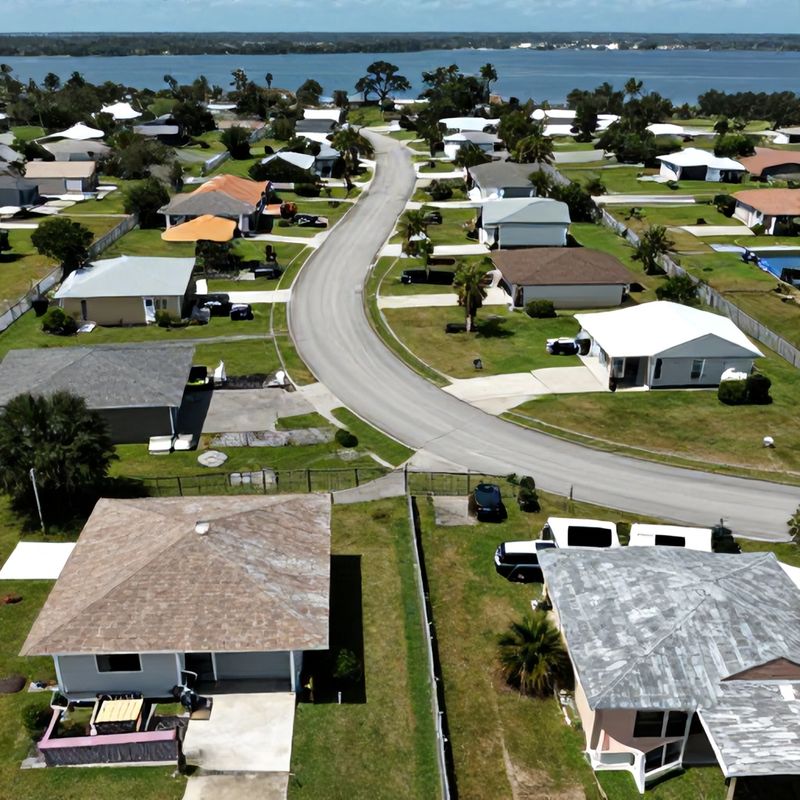
Your parcel has an authority, and it is not always the one on your envelope
A metro like this one is a set of incorporated cities sitting inside three counties, and each city administers its own building and land development code independently of the county's code for the unincorporated territory around it.
Tampa runs chapter 27. Clearwater runs a Community Development Code that is a different document from Clearwater's own Code of Ordinances, and both are different again from Pinellas County's Article X. Largo has a Comprehensive Development Code.
New Port Richey has Land Development Code chapter 12. None of these documents defers to any of the others.
What follows from that is the single most useful habit this hub can teach. A postal address does not establish jurisdiction. Neither does a shared media market, a neighborhood name, or a subdivision brand.
Only the parcel map does. A reader who says "I live in Wesley Chapel" is telling you a place name that has no city government at all; the rule that governs their fence is Pasco County's, administered from a county office. A reader who says "I live in Riverview" is in unincorporated Hillsborough, and the answer changes with the county line rather than with the neighborhood.
There is a trap inside that habit worth naming, because it has caught better sources than ours. The office that administers a county's code is routinely headquartered inside a city it does not govern for this purpose. Pinellas County's building office sits physically in Clearwater and administers the county code for unincorporated Pinellas.
If your parcel is inside Clearwater city limits, the city's own Community Development Code governs your fence, and the county office on Court Street is the wrong door regardless of what its street address suggests. (Our Clearwater page opens with that sentence for the same reason.)
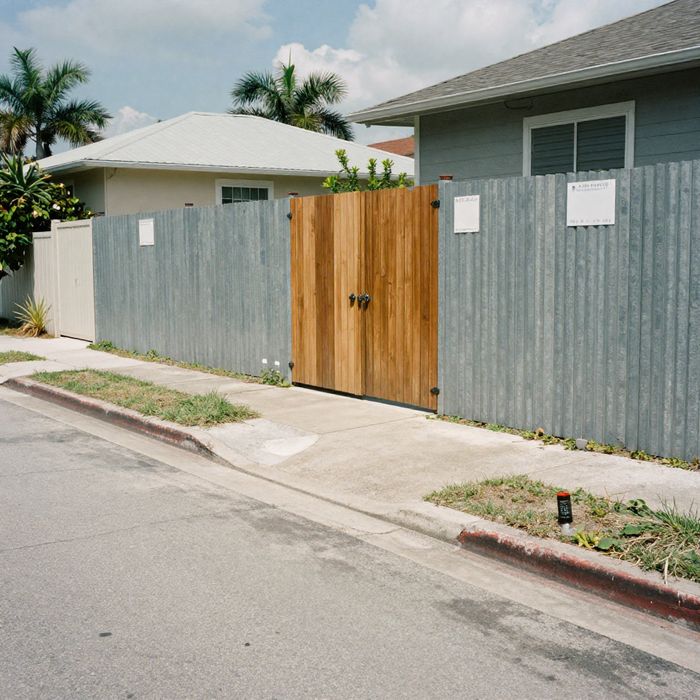
The finding that surprised us: bigger authority does not mean stricter rule
When we set out to map permit requirements across this metro, we expected the usual pattern of counties setting a floor and cities adding to it. That is not what the documents say.
In unincorporated Hillsborough, the codified Land Development Code at section 6.07.01.C states that fences require neither a zoning permit nor a building permit; walls do require one.
In unincorporated Pasco, standard residential fences sit on the county's own exemption list, which is explicit that a fence supported by brick, block or concrete columns falls back into the permit requirement.
Then a mile inside New Port Richey city limits, section 12.05.00 requires a fence permit for every fence, with no exception for material or height. Two of the three counties largely step back, and one small city of about seventeen thousand people is the strictest confirmed authority in the footprint.
That inversion is the reason this site publishes a jurisdiction table at all, and the reason no page here answers the permit question generically.
The full matrix carries eighteen authorities with the document, the date and the code section behind every cell, including the rows where the answer is genuinely not established.
Unincorporated Pinellas is the clearest of those: four of the county's own pages contradict one another on whether a fence needs a permit, and the contradiction is the finding rather than an invitation for us to pick the friendliest page.
That one gets resolved by telephone, on 727-464-3888.
A community development district is not your HOA
Three of the eight places on this list are unincorporated subdivisions where the public rule is the county's, so the interesting layer is private. It is also the layer where most local pages go wrong.
A Community Development District exists under Florida Statutes chapter 190. It is a special-purpose local government with a board of supervisors, created to finance and maintain infrastructure, roads, stormwater and utilities, repaid through assessments on your tax bill. Chapter 190 gives it a limited, listed set of powers and expressly withholds zoning, land use and regulatory police power.
A district can adopt design guidance for property it owns; it does not, by default, review your fence.
Your homeowners association is a separate legal entity operating under its own recorded declaration, and its architectural authority comes from section 720.3035.
That authority is real, and it is bounded: it exists only to the extent the declaration or its published guidelines specifically state it, it must be applied consistently, and a denial has to give written notice naming the covenant relied on and the part of your proposal that does not conform.
From 1 July 2026 an association may not require you to hold a building permit as a prerequisite to its own review, which settles a sequencing question that used to trip people up.
So a lot inside a district can be exempt from any public fence permit and still need private approval, because the two tracks run independently.
We found eleven named districts across Wesley Chapel, Riverview and Land O' Lakes, each confirmed through the district's own site or the Supervisor of Elections registry rather than through a real-estate blog.
What no source tied to any of them is a fence-specific design rule. The honest claim is that these are district-governed master-planned communities where an association review step is likely, and that you check your own recorded documents. It is not that the district enforces a fence standard, and any page telling you otherwise has assumed it.
The 2026 state exemption, and what it does not do
House Bill 803, enacted as chapter 2026-63, took effect on 1 July 2026.
It requires a local government that issues building permits to exempt a single-family homeowner or their contractor from the local building permit requirement for work valued at under $7,500 on the owner's property.
It excludes property lying wholly or partly in a flood hazard area, which is a large share of this metro, along with electrical, plumbing, structural, mechanical and gas work. A project may not be split into smaller pieces to slide under the threshold, and the exemption is claimed by written request with contract documents rather than arriving automatically.
Read carefully, and several things it is widely said to do are absent from the text. It reaches building permits, not zoning approvals. The word "preempt" does not appear in it, nor does any "notwithstanding any ordinance" clause.
The term "structural" is used without being defined.
So whether a New Port Richey fence permit, which reads as a flat zoning-compliance requirement rather than a valuation-based building permit, is touched by the exemption at all is unresolved in the law itself, not merely in our research.
We say so on that city's page instead of declaring a winner.
There is a dated illustration of why this matters. Hillsborough County's exempt-work list carries a printed revision date of 29 June 2026, two days before the act took effect. It cannot have accounted for it.
Every figure and every exemption list on this site carries its own date for exactly this reason.
There is no local price advantage, and we are not going to invent one
Fence pricing is local, which is why this site exists. But local means metro, not municipal. Across all of our cost work we found no reliable price differential between one county and another in Tampa Bay, and no page in this layer carries a per-linear-foot band.
Anyone publishing "fence prices in Largo" as though they differ measurably from prices four miles away in Pinellas Park is producing content, not data. The bands, the material breakdown and the quote-reading guidance live in what a fence costs per linear foot here.
What does differ by place is the fee, and fees are strange in this metro. Tampa's Miscellaneous Projects schedule contains no fence line item at all, leaving a real classification question between a $177 general row and a $475 privacy and retaining wall row. Largo charges by job value rather than a flat rate.
New Port Richey's own schedule shows $35 as current and $45 as proposed for a fiscal year that ended long ago. Pinellas County does not publish a fee schedule as a document at all, instructing readers to open its budget book and scroll. Those are per-place facts and they live on the per-place pages.
How to establish which rules apply to you
Four steps, in order, and the order matters because each one narrows what the next has to consider.
- Find the parcel, not the address. Your county property appraiser's map shows the municipal boundary. If the parcel sits inside a city, that city's code governs. If it does not, the county's code governs and the city on your envelope is irrelevant to the question.
- Read that authority's own document, not a summary of it. Every page in this layer names the code section and its supplement date. Five independent commercial sources agreed that Tampa allows a four-foot front fence; the codified section says three feet for an opaque one. Agreement between secondary sources is not evidence, because they copy each other.
- Check whether a private track applies as well. A recorded declaration, an architectural committee, published guidelines. This is separate from the public permit and neither one substitutes for the other.
- Call the office named on your page before you order materials. Not to be told a rule you already read, but because permit positions, fee schedules and interpretations move faster than any published page, ours included.
Two places we chose not to publish
Ten places reached our candidate list and eight became pages.
The rule is that a place-specific page ships only when research finds substance a reader cannot get from the county page or the reference table: a named office, its own ordinance, a fee, a dimensional rule, a confirmed institution at a real address.
Spring Hill is in Hernando County, outside the three-county area this site covers. It reached the list because the keyword harvest is metro-wide, and including it was our planning error rather than a research failure. Brandon yielded no address-confirmed institution, ordinance or rule of its own; its public rule is unincorporated Hillsborough's, already covered.
Population figures and a note about growth would have filled a page, and that is precisely the filler this test exists to catch. Both places are better served by the county rows in the reference table than by a page about them that had nothing in it.
Everything in this hub
Hillsborough County
- Fence Permits in Tampa: The Fee Nobody Can Quotethe metro's largest city, with a codified height rule that contradicts every aggregator and a permit fee that its own schedule never names.
- Fence Permits in Riverview: Four CDDs, One Creekunincorporated Hillsborough, four address-confirmed community development districts, and a watershed question the county's own floodplain viewer answers better than we can.
Pinellas County
- Fence Permits in St. Petersburg: No Footer, No Permitthe most fully documented jurisdiction on the site: no permit for a fence meeting zoning with no footer, plus a complete dated height table from the city's own handout.
- Fence Permits in Clearwater: Chain Link Is Its Own Rulethe most unusual fence code in the metro, where chain link is regulated as its own class, capped, banned in several positions and required to be landscaped.
- Fence Permits in Largo: The Exemption's Limitsa correction: an ordinance exempts small like-for-like replacement, with pool barriers carved out of the exemption entirely.
Pasco County
- Fence Permits in New Port Richey: Every Fence, With a Caveatthe strictest confirmed posture in the footprint, a permit for every fence, and the clearest case of the 2026 state exemption leaving a question open.
- Fence Permits in Wesley Chapel: Five CDDs, One County Ruleunincorporated Pasco with five registered districts, where the public rule is simple and the private layer is dense.
- Fence Permits in Land O' Lakes: Walk In, Don't Driveunincorporated Pasco, two districts, and one of only three Pasco offices where a resident can walk in and ask in person.
The reference table for the whole metro
- Tampa Bay Fence Permit Rules by City and County, 2026eighteen authorities, one row each: permit position, office, fee and basis, code section, document date, and an explicit "not established" wherever that is the truth. This is the page the eight above link back to, and it carries the permit-requirement checker.
Questions this hub answers
How do I find out which authority governs my fence?
Look up the parcel on your county property appraiser's map and check whether it falls inside a municipal boundary. Inside a city, that city's code applies. Outside one, the county's code applies and your mailing city has no bearing on it.
Does the 2026 Florida law mean I no longer need a fence permit?
Not by itself.
My neighborhood has a CDD. Do I need its approval for a fence?
Almost certainly not from the district itself. A community development district under chapter 190 finances and maintains infrastructure and has no zoning or land-use power. Your architectural approval, if any, comes from a homeowners association operating under its recorded declaration and section 720.3035.
Are fences cheaper in one part of Tampa Bay than another?
No differential is established anywhere in our research, and we are not going to imply one. Permit fees genuinely differ by authority, and those sit on the individual city pages with their source documents. Installation pricing is a metro-level question covered in the cost guide.
Why are there only eight city pages when the metro has dozens of municipalities?
Because a page ships only when a place yields something a reader cannot get from the reference table: its own ordinance, its own fee, its own office, a confirmed institution. Places that yielded nothing but demographics did not get a page. Two candidates were dropped for exactly that reason, and the reference table covers ten further jurisdictions at row level.
This hub explains how fence rules are structured across Hillsborough, Pinellas and Pasco counties. It is general information, not legal advice or a compliance determination for any parcel. Tampa Bay Fence Co. does not install fences, does not employ crews and holds no contractor license. Permit positions, fee schedules, code sections and their supplement dates change, and a rule can differ on opposite sides of a single street. Confirm anything affecting your project with the office named on the page for your place before you order materials or sign a contract. Where a page connects you with a contractor, we may be compensated, and that never affects what a page says.
Code and permit claims on this page reviewed by Dana Whitfield, CGC, certified building code inspector.
Want a quote read by someone who has no stake in it?
We do not install fences. Tell us what you are planning and we pass the request to a licensed contractor who works your area.
Request a callback
Enter your number and we will call you back. Nothing else is required.
We do not install fences. Your request goes to a licensed contractor who works your area, and we may be compensated for the introduction.
Advertiser disclosure. This page can earn us money. If your request reaches a contractor through the form or the phone number above, we may be compensated for that introduction. It has never determined what any page on this site says, and no contractor has editorial input. We hold no contractor licence of our own and perform no work.