Materials
Vinyl vs Aluminum Fence: And Is That "Wrought Iron"?
Privacy or an open sightline, what salt air does to each, and why most "wrought iron" sold here is neither - with Tampa Bay bands gathered July 2026.
By Ray Vasquez · Published July 28, 2026 · Last checked July 28, 2026
On this page
Every few weeks somebody calls asking which fence “holds up better” near the water, and half the time they mean two completely different products. Vinyl and aluminum sit in the same price neighborhood, both get sold as low-maintenance, and they end up shopping-listed together for exactly one reason: neither is wood and neither is chain link. Past that, they solve different problems. One blocks a view entirely. The other marks a boundary and lets you keep looking through it. If you already know which of those two you want, this decision is mostly done before we open a single table.
This page sits inside a hub built on one rule: compare materials against each other, never sell one over the rest. How we compare fence materials without selling one explains the method once; every material page here, including this one, inherits it rather than repeating the pitch.
This is an independent guide to fencing in the Tampa Bay area. It does not install fences, employ crews, sell materials, hold a contractor’s license or accept referral fees from anyone in the trade, and nothing below crowns a universal winner - the right material depends on what you’re asking the fence to do.
How we compared them
Nine criteria decide this page, and in twenty-two years of quoting both materials, I picked them because they’re the ones that actually come up across every independent side-by-side I could find for this pair, not because they flatter one material over the other. Privacy, cost, service life, coastal behavior, impact and repair, maintenance, looks, wind, and end of life - that’s the list, roughly in the order it matters to somebody standing in their own yard.
None of it comes from testing I ran myself. I haven’t put a vinyl panel and an aluminum picket through a salt-air chamber, and nobody selling either one has let me watch theirs get tested either, as far as I could find. Every performance claim below is a researched claim, sourced and dated, not a measurement taken on this site’s behalf.
Here’s the tier worth stating before a single number shows up: almost nothing in this comparison comes from an official standards body or an independent lab. Service life, warranty terms, and degradation timelines are manufacturer- and installer-sourced throughout, which is normal for this category and also means every one of those figures deserves the hedge it gets below instead of blind trust.
The comparison
| Criterion | Vinyl | Aluminum | How solid is this claim |
|---|---|---|---|
| Privacy and sightline | Solid panels block the view completely | Open picket work, sightline stays clear | Descriptive, not a sourced figure |
| Installed cost class | $25-40/lf at 6 ft | $28-45/lf | This site’s own cost research, gathered July 2026 |
| Published service-life range | Commonly cited 20-30 years, some sources 25-35; “lifetime” warranties cover material defects only | Claimed 30-50+ years for a properly finished system | Commercial-sourced, not independently confirmed |
| Coastal and UV degradation profile | UV-driven chalking, fading and embrittlement; worse on dark colors | Won’t rust, but the finish and fasteners are vulnerable to galvanic corrosion near salt | Mechanism corroborated across sources; no Florida timeline published |
| Impact resistance and repairability | Resists denting, cracks under impact once UV-aged; repair is a whole-panel swap | Structurally stronger under impact; individual pickets usually swap out | Corroborated across at least three commercial sources per side |
| Maintenance routine | No paint or stain, but periodic washing is needed against mold and mildew | A periodic hose rinse generally covers it | Commercial sources |
| Design and color versatility | Solid-panel look, limited to the manufacturer’s color and privacy-style range | Ornamental picket styles and finish colors, though styling doesn’t change the open sightline | Descriptive, not a sourced figure |
| Wind exposure behavior | Flat panels present more surface area, can be damaged by heavy wind or debris | Open construction lets wind pass through, generally lighter load on posts and footings | Basic aerodynamics; no Florida-specific failure number |
| End of life | Not meaningfully recyclable in practice | Fully recyclable, retains scrap value | Single commercial source |
Take the fourth column seriously before you take any single row at face value - it names how solid each claim actually is instead of dressing every row in the same confident voice. Row two is the one most people came here for, and it won’t give you a clean winner. Vinyl privacy runs $25-40 a linear foot installed at six feet; aluminum ornamental runs $28-45. See how these bands were gathered, and what they exclude for the research behind them, or price your own run with these rates instead of eyeballing it from a table. Those bands overlap across most of their range, so if you came here hoping cost would make the decision for you, it mostly won’t - what the fence is actually for ends up mattering more than the invoice.
Salt air, sun, and what actually degrades
Vinyl’s enemy is the sun, not the salt. Every credible source on this points to the same mechanism: ultraviolet light breaks down the inhibitors mixed into the PVC, and once that additive package degrades, the surface starts to chalk and fade, embrittling over enough years for it to matter. Darker colors take it worse, since they absorb more UV to begin with. Tampa Bay’s subtropical sun load is expected to speed that process along, and I’d bet on that being true. What I won’t do is hand you a year count, because nobody publishes a Florida-specific timeline for when chalking actually starts. The mechanism is solid. The clock on it isn’t.
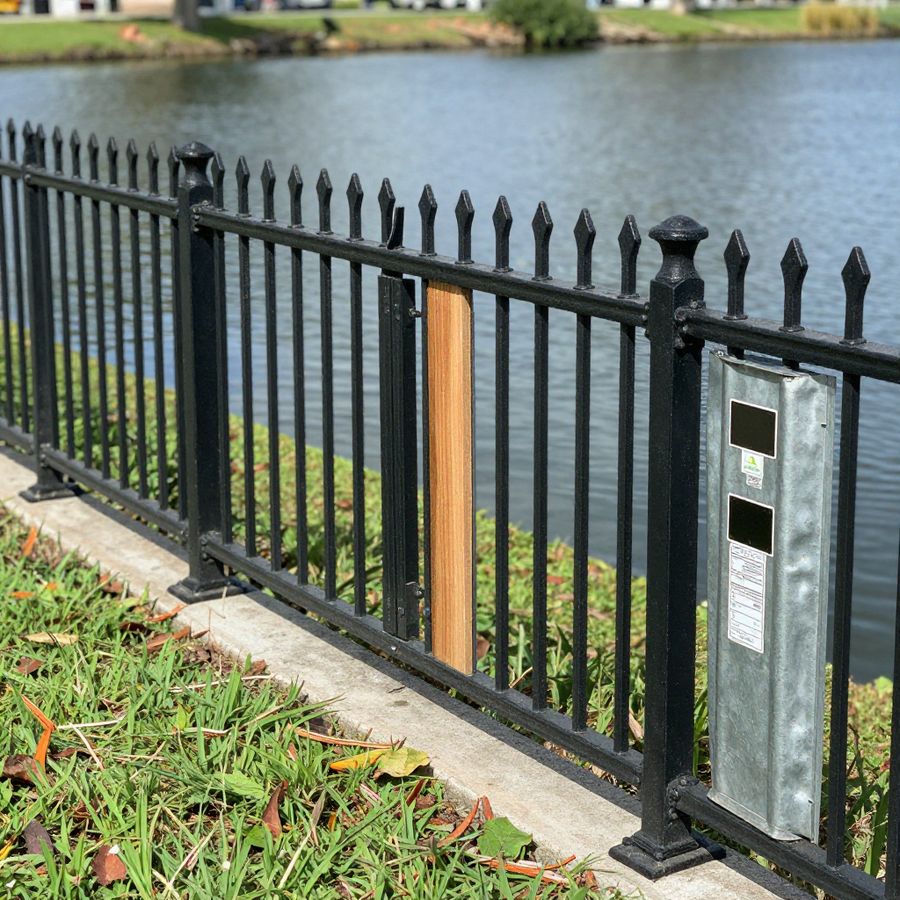
Aluminum doesn’t rust, full stop - that part of its reputation holds up. What actually fails near the water is the finish and the hardware. Powder coat can chip or wear thin at a fastener point, and once two dissimilar metals sit together in salty, humid air, galvanic corrosion and pitting show up right where they touch. A Cape Coral installer source lays out the fix plainly: 316 stainless or hot-dip galvanized fasteners, with isolators separating whatever metals aren’t the same. A finishing company outside Florida reports something worth taking seriously anyway - unfinished aluminum pitting within weeks of chloride exposure, with airborne chloride from ocean spray measured more than fifty miles inland.
Put those two facts together and the real story is this: aluminum’s reputation for shrugging off salt air is a hardware decision, not a guarantee that comes with the metal. I’ve watched aluminum runs fail exactly there - not the pickets, the fasteners - on repair calls years after the original install, which lines up with what that mechanism predicts. Ask whoever quotes your aluminum fence what fastener grade they’re specifying before you sign anything, because nobody I found has put a number on what a Tampa Bay yard actually loses in service life if that question goes unasked.
“Wrought iron” is usually not what you think
Here’s the mix-up I hear more than any other on this page’s topic: somebody wants “wrought iron” and means aluminum, or wants aluminum and gets sold something else entirely. Most of what carries the wrought iron name in this market today is powder-coated steel, not aluminum and not actual wrought iron. That matters because steel rusts if the coating ever gets breached, aluminum doesn’t, and you’re paying for two different risk profiles under one label.
Real hand-forged wrought iron still exists, and the price gap between it and the modern look-alike tells you how far the naming has drifted. One source draws that line itself: “modern wrought iron,” meaning steel or an aluminum look-alike, runs $25-55 a foot, against $300-500 a foot for the true hand-forged version. That’s not my estimate - it’s the same source drawing its own distinction, which tells me the confusion is real enough that even sellers feel the need to clarify it.
Tampa Bay pricing for the name itself is thin, and I’d rather show you the thinness than paper over it.
| Figure | Source | Date | Scope | Range or floor |
|---|---|---|---|---|
| $25-55/ft (modern wrought iron - steel or aluminum look-alike) | National cost source, in its own words distinguishing modern from hand-forged | 2026 | National | Range |
| $300-500/ft (true hand-forged) | Same national source | 2026 | National | Range |
| “From $38/ft” | Tampa-tagged directory listing | 2026 | Tampa | Floor, not a range |
| $20-26/lf | ProMatcher | 2021 | Tampa | Range |
| $20-100/ft | homeyou | 2026 | Tampa | Range |
| $35-65/ft | Cross-market source | 2026 | Multiple metros | Range |
No two of those numbers were gathered the same way, so I’m not averaging them into a false middle. This metro simply doesn’t have one measured wrought-iron price, and pretending otherwise would be worse than saying so plainly.
One more thing before you go looking at a calculator: the cost estimator on this site doesn’t price wrought iron at all, and won’t until somebody gathers a real Tampa Bay number for it. That’s not an oversight. A tool that guessed at a wrought-iron rate would be handing you a number with more confidence than it deserves, and this site would rather leave the gap showing than fill it with a guess.
When something breaks
A stray baseball or a runaway lawn mower treats these two materials differently, and the difference shows up years later, not on installation day. Vinyl resists denting well - it won’t dimple the way a softer material might - but it cracks under a hard enough impact, and a panel that’s already taken years of UV damage cracks more easily than a new one. Because vinyl fencing is built and sold as manufacturer-specific panel systems, a cracked section usually means replacing the whole panel, not just the damaged piece. Try to match an older panel to whatever that manufacturer currently sells and you may find the color or profile has changed enough that the seam shows.
Aluminum holds up better against a direct hit; it’s the stronger material structurally. The repair is smaller too. In most cases, a single bent or damaged picket can be pulled and replaced without touching the rest of the run, because the construction is picket-based rather than panel-based. That’s a real advantage if your fence sits somewhere it’s likely to take a hit, along a driveway or near where kids play, and it’s worth weighing against the sightline question before you decide.
For whom each one wins
Vinyl wins when privacy is the actual point of the fence - a pool deck you don’t want the street watching, a patio close enough to a neighbor’s window that you’d rather not make eye contact over dinner. Accept that trade and you’re also accepting a periodic wash-down against mold and mildew, because Florida humidity doesn’t care what the label says about low maintenance, plus a harder repair if a panel ever cracks.
Aluminum wins when the boundary matters more than privacy - a canal view you don’t want blocked, a front yard where an open, decorative look reads better than a wall, a pool barrier where you need to actually see a kid in the water rather than trust a solid panel to keep them supervised from the house. In exchange, you’re signing up for less long-term maintenance labor and an easier picket-level repair, with one condition that isn’t optional: your installer needs to spec coastal-appropriate fasteners, or the metal’s reputation for shrugging off salt air won’t hold.
Settle the naming question before either number matters. If you searched “wrought iron fence” to land here, decide which product you actually mean before you compare a single price against it.
Frequently asked questions
Do aluminum fences rust? No, aluminum itself doesn’t rust. What corrodes is the finish and the fasteners, and it happens galvanically wherever dissimilar metals sit together in salty, humid air. Ask your installer to spec 316 stainless or hot-dip galvanized fasteners with isolators between metals, especially close to the water.
Does a vinyl fence fade in the sun here? Yes, eventually - UV breaks down the inhibitors in the material, showing up as chalking and fading first, with embrittlement following as that additive package keeps breaking down, worse on darker colors. Nobody publishes a Florida-specific timeline for when it starts, so trust this page’s word on the mechanism and be wary of anyone who hands you an exact year.
Is a wrought-iron fence the same as an aluminum fence? Usually not. Most of what’s sold as “wrought iron” today is powder-coated steel, a different material with a different rust risk if the coating ever fails, and the price spread above shows how far the naming has drifted from the real thing.
How long does an aluminum fence last? Manufacturers claim 30-50 years or more for a properly finished system, but that figure comes entirely from installers and manufacturers, not an independent test. Treat it as a commercial estimate, not a guarantee.
Which one is cheaper? Neither, cleanly - vinyl runs $25-40 a linear foot installed and aluminum runs $28-45, and those bands overlap. Price your own yard on the fence cost estimator linked above and use the verdict above to decide what you actually want the fence to do.
Decide what the fence is there to do before you compare a single price. If this is a canal-front run or a front boundary and you’re leaning aluminum, ask your installer point blank what fastener grade they’re specifying - that one question protects the metal’s whole reputation for handling salt air. And once you know you want vinyl, the next comparisons are close by: vinyl against the cheaper option, and what that trade costs over ten years, or vinyl against the budget option if a tighter number is the real constraint.
Sources
| Claim group | Source class | As of |
|---|---|---|
| Both installed-cost bands | This site’s own cost research, reused verbatim | Gathered July 2026 |
| Service life, warranty, degradation, impact, maintenance, wind, recyclability | Commercial - manufacturer and installer marketing, none independently verified | 2026 |
| Galvanic corrosion mechanism and coastal hardware recommendation | A Cape Coral, Florida installer source, plus a non-Florida architectural-aluminum finisher | 2026 |
| Wrought-iron price spread and the modern-versus-hand-forged distinction | ProMatcher (2021), homeyou (2026), a Tampa-tagged directory floor, and a national source’s own modern-versus-hand-forged distinction | Gathered 2026-07-28 |
Bands gathered July 2026; page last reviewed July 28, 2026.
This is an independent guide to fencing in the Tampa Bay area. It does not install fences, employ crews, sell materials, hold a contractor’s license or accept referral fees from anyone in the trade, and neither material above has a crowned winner - the right one depends on what you want the fence to do, not on which page you’re reading.

Read next
- Chain Link vs Vinyl: Cheapest Fence, and Its CatchWhat chain link saves, what it costs you in privacy and acceptance, why coated beats bare near the coast - and the two jurisdictions here that restrict it outright.
- Deferred-Interest Calculator: What It Costs If You MissEnter your own financing offer and see what deferred interest actually costs if a balance remains at the end of the promotional window - side by side with clearing it in time.
- Fence Cost Estimator for Tampa BayEstimate a fence in Hillsborough, Pinellas or Pasco by material, height, gates and terrain - with every rate shown, dated and sourced, and no email required.
Want a quote read by someone who has no stake in it?
We do not install fences. Tell us what you are planning and we pass the request to a licensed contractor who works your area.
Request a callback
Enter your number and we will call you back. Nothing else is required.
We do not install fences. Your request goes to a licensed contractor who works your area, and we may be compensated for the introduction.
Advertiser disclosure. This page can earn us money. If your request reaches a contractor through the form or the phone number above, we may be compensated for that introduction. It has never determined what any page on this site says, and no contractor has editorial input. We hold no contractor licence of our own and perform no work.