Fence Projects
Walk Gate Installation: The Detail Buyers Skip
What a pedestrian gate actually needs versus a driveway gate - standardized hardware, leaf count, and the self-closing question near a pool.
By Ray Vasquez · Published July 28, 2026 · Last checked July 28, 2026
On this page
What a Walk Gate Actually Is
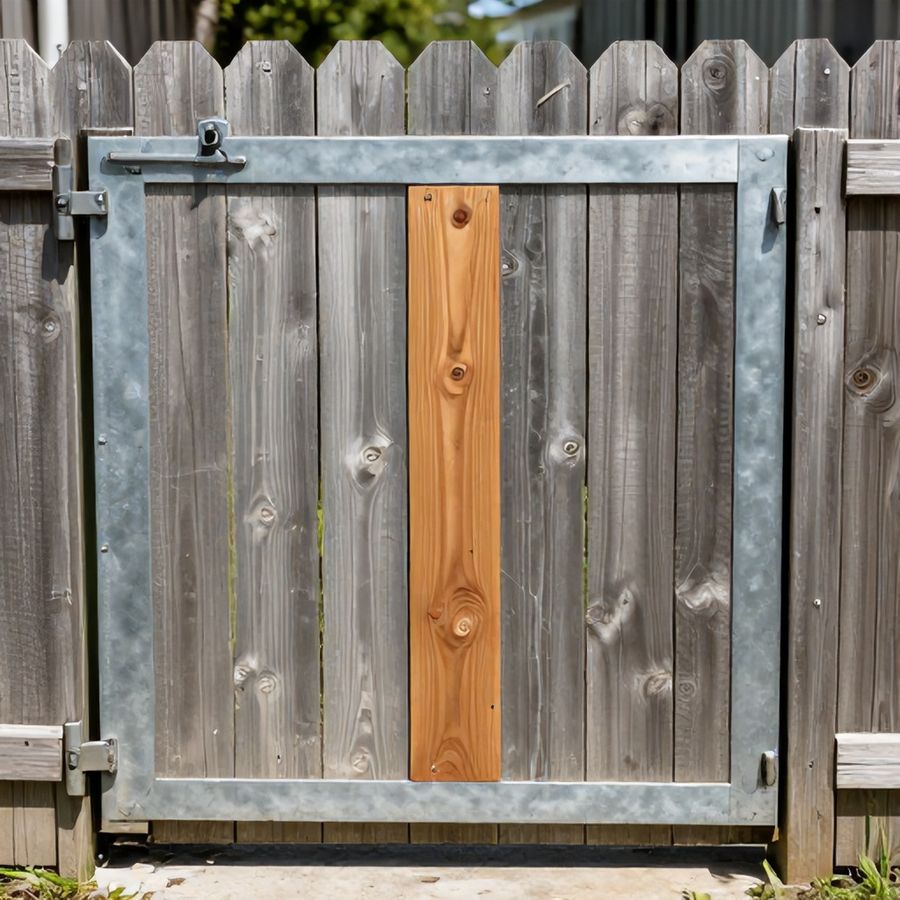
A walk gate is the pedestrian opening in a fence line: hinges, a latch, sometimes a closer, picked off a hardware catalog rather than engineered job by job. That’s the entire difference from the custom swing-and-post math behind a driveway gate.
How This Site Works
This site catalogs fifteen fence and gate situations across Tampa Bay independently - no installation sold here. For the rest of the fence projects we cover, start there.
Hardware, Leaf Count, and the Pool Question
Every walk gate starts from the same short parts list: hinges, a latch, sometimes a closer that pulls it shut behind you - none of it engineered to the yard, which is why it costs less than anything with a motor.
Single-leaf covers most openings; three to four feet clears a wheelbarrow or a mower. Wider spans usually go double-leaf, which commonly adds a drop rod or secondary lock on the leaf that isn’t used daily - a problem single-leaf never has. Keep any keypad or intercom clear of the gate’s swing and latch.
Here’s what matters more. Wherever this gate sits between a yard and a pool, or a similarly restricted area, self-closing and self-latching hardware, latch out of a child’s reach, stops being optional. I’ve watched plenty go in with nobody asking if the yard had a pool - a common blind spot. This page won’t restate the clause or the latch height; settle whether self-closing hardware is required for your gate before ordering.
When self-closing hardware is - and isn’t - optional
| Situation | Self-closing, self-latching hardware |
|---|---|
| Gate sits next to a pool or similarly restricted area | Not optional - verify whether self-closing hardware is required for your gate |
| Ordinary garden or side-yard fence, no pool nearby | Not required by this page’s logic, but check local rules anyway |
| Gate only reaches shared pool equipment, no barrier function | Not a barrier gate - see equipment enclosure fencing instead |
What a Walk Gate Costs
A walk gate runs about $300 to $550 each, per this site’s own cost research from July 2026 - the least expensive gate in the catalog. The rest of the gap versus a driveway gate is engineered posts and vehicle-rated hardware.
Who’s Allowed to Install It
Florida doesn’t license fence installation as its own trade. Pinellas is the outlier: its Construction Licensing Board (727-582-3100) still lists a “Fence Erection Specialty Contractor” category, though whether it’s still issuing new ones since HB 735 is unclear. Pasco and Hillsborough have no such category - you’re the vetting authority there. Licensed or not, that doesn’t by itself settle the pool question above.
Red Flags
Self-closing or self-latching hardware skipped, propped open, or wired shut on a pool-adjacent gate - the real failure mode here. A keypad mounted so close that using it means reaching across a moving part. And the same vetting duty that applies to any post-setting job on this site: has anyone called 811 before digging?
The Honest Verdict
A walk gate is the simplest, cheapest gate on this site for a plain opening - right up until it sits next to a pool, and that’s the detail buyers skip. Ordering the right hardware doesn’t guarantee the install passes a safety-code check.
Frequently Asked Questions
Does a walk gate near my pool need to be self-closing? Yes, plainly. Verify whether self-closing hardware is required for your gate rather than assuming a standard latch covers it.
Single leaf or double leaf - which do I need? Single-leaf handles most openings; go double-leaf for a wider span, and expect a drop rod or secondary lock on the unused leaf.
Why is a walk gate so much cheaper than a driveway gate? Standardized hardware versus custom engineering - post sizing and swing or slide geometry built for vehicle weight, none of which a walk gate needs.
If this gate sits near a pool, settle whether self-closing hardware is required for your gate before ordering. A vehicle behind it is a different job: see what changes when the gate carries a vehicle instead of foot traffic, or what changes when the gate is powered. For sizing the rest of the job, that’s where the bigger numbers live.
Sources
| Claim | Source | As of |
|---|---|---|
| Price ($300-550 each) | This site’s own cost research | July 2026 |
| Self-closing/self-latching requirement (existence only) | Commercial source; full citation on /safety-act-requirements/ | 2026 |
| Licensing, Pinellas | Pinellas County Construction Licensing Board, 727-582-3100 | Retrieved 2026-07-28 |
| Licensing, Pasco and Hillsborough | County competency-category lists | Pasco Rev. 01/02/2024; Hillsborough current |
| Call-before-you-dig duty | Fla. Stat. ch. 556 / Sunshine 811 | 2026 |
Prices and licensing details last reviewed July 28, 2026.
This is an independent guide to fencing in the Tampa Bay area. It does not install fences, employ crews, or hold a contractor’s license, and nothing above promises that any hardware choice will pass a safety-code inspection.
Code and permit claims reviewed by Dana Whitfield, CGC.


Code and permit claims reviewed by Dana Whitfield, CGC, certified building code inspector.
Florida-licensed general contractor, certified building code inspector. How we check facts: our sources and limits.
Read next
- Above-Ground Pool Fence: The Installation DecisionWhether your above-ground pool's own wall counts as the barrier, when a separate fence is required, and what the ladder question really means.
- Automatic Driveway Gate: The Safety-Device QuestionWhat a gate opener's safety devices must include, why the wiring is a separate trade, and why the price spread is wide - with no confirmed Tampa Bay figure yet.
- Commercial Chain Link: Why It Isn't a Taller Residential FenceThe real spec difference between commercial and residential chain link, the standard everyone cites wrong, and two municipal rules here that can restrict it outright.
Want a quote read by someone who has no stake in it?
We do not install fences. Tell us what you are planning and we pass the request to a licensed contractor who works your area.
Request a callback
Enter your number and we will call you back. Nothing else is required.
We do not install fences. Your request goes to a licensed contractor who works your area, and we may be compensated for the introduction.
Advertiser disclosure. This page can earn us money. If your request reaches a contractor through the form or the phone number above, we may be compensated for that introduction. It has never determined what any page on this site says, and no contractor has editorial input. We hold no contractor licence of our own and perform no work.